Core of the issue
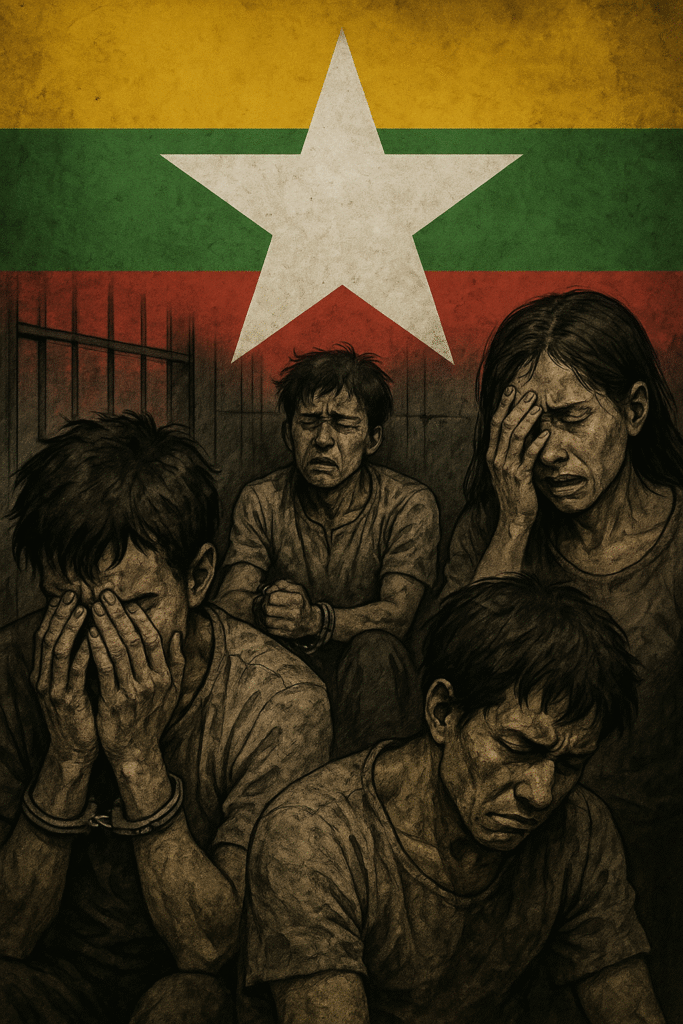
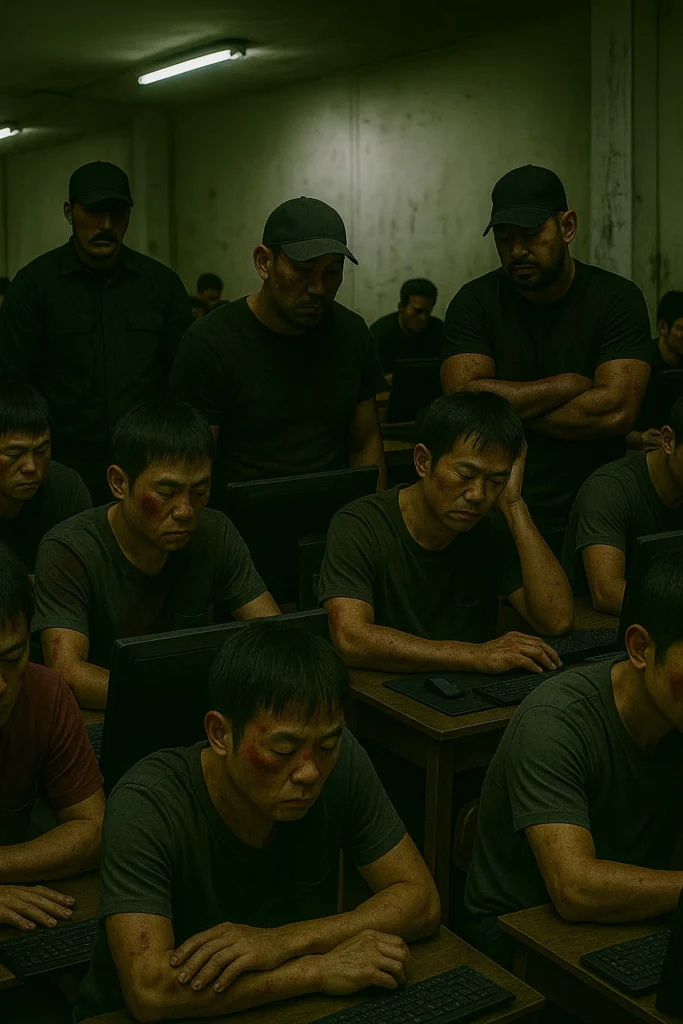
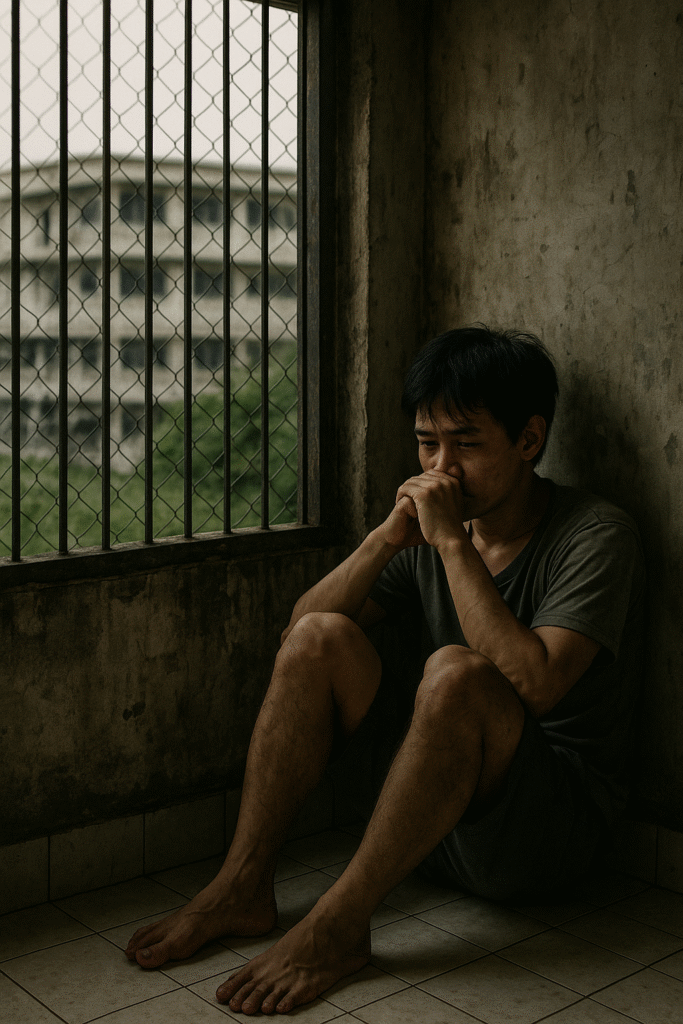
In today’s world, a problem corroding our society is the neglect of issues that are local and do not concern the majority of humanity. Such is the problem of scam compounds in Southeast Asian countries – Myanmar, Cambodia, Laos, Philippines, Vietnam, and Malaysia. Thousands of people are lured with promises of a better future and a successful life. Very often, where there is a low standard of living, people also tend to have less awareness of the dangers threatening them.
The absence of a conscious society capable of discerning between good and evil brings to the forefront purely instinctive drives that lead to demoralization, which ultimately results in a greater likelihood of falling into the traffickers’ networks. Low awareness, combined with the strong natural urge to seek livelihood, acts as an accelerator of the scam compound problem.
Here emerges the second actor in the scheme – the criminals. As the main driving force behind the constant degradation of society, they have no interest in ordinary people being aware and soberly perceiving the level of misery and downfall that exists in the country, i.e., to judge them.
It is precisely for this reason that, in the affected regions, the power of the strongman manifests itself – the stronger one dictates the lives of the inhabitants. And here lies the crux of the matter: this dictatorship not only destroys people’s standard of living from a purely economic perspective but also renders them indifferent to problems, turning them into beings without souls.
A clear example: the division of Myanmar into territories controlled by different armed groups creates in its inhabitants a sense of isolation, one they cannot overcome on their own. When internet connections are cut off and people face difficulties traveling between regions, they adapt to a herd-like way of life. There is an absolute impossibility for them to obtain the basic benefits they should enjoy as human beings.
Over time, they forget about these benefits and live only to secure their daily food. A visible civilizational collapse.
The mission of this website is to keep society – and especially the victims or potential victims – informed about scam compounds and the people behind them. The creators of this website believe that the thousands of human beings left without choice in their own existence must be given, as soon as possible, the chance to make a choice of their own – a choice that guarantees their existence as human beings.
Root Causes of the Problem, Current Situation, and Attempts Made So Far.
Part 1 – Myanmar
When tracing the problem chronologically, we will focus on the decisions made so far by the governments/regimes of Myanmar, Cambodia, and Laos.
The first to be examined is the problem in Myanmar, as it is the main country where scam centers are concentrated. In this country—and to a certain extent also in the other two—the problem is rooted in years of ineffective governance and a non-functioning state. All immoral ways of making money have never been foreign to the ruling elites—very often, scam compounds serve as accelerators for raising funds by military factions and armed groups. An example of this is the Karen National Army (KNA) and the Democratic Karen Buddhist Army (DKBA), which for years have provided security for compounds located along the Thai border (Myawaddy region).
Tracing the roots of the problem leads us back to the late 1980s and early 1990s. Even at the very inception of fraud operations in the region, the influence of these factions is evident. It all began with ceasefire agreements between the military junta and ethnic armies, which allowed the groups to govern their respective areas autonomously. (For example, the United Wa State Army—a group that supported the Communist Party of Burma until 1989).
These groups did not contribute to the economic development of the territories they controlled. Having done nothing for the prosperity of the people they “governed,” they logically blocked opportunities for external economic connections that could have benefited the region in the form of investments—primarily through the creation of manufacturing facilities. The problem was that their need for weapons and military equipment was high, but there was no capacity for generating value-added production.
As economic relations dwindled and trade declined, these armies became powerless yet were in dire need of financing for the above-mentioned goods. At this moment began the organized production of narcotics, illegal trade, and casinos—i
nitially situated along the Chinese and Thai borders. The gambling ban in China made these ventures especially profitable, while in parallel opium plantations expanded. It is worth noting that Myanmar is the world’s second-largest opium producer after Afghanistan, and all its neighboring states suffer the consequences of this “trade.”
In the 2000s, there was increased expansion of casinos along the Thai border, largely controlled by the Karen Border Guard Force (BGF), a former faction of the Democratic Karen Buddhist Army. The individuals behind this formation are notorious figures holding military ranks—most prominently San Myint (commonly known as Chit Thu), commander of the BGF.
In the eastern Shan State, bordering China’s Yunnan province, another ceasefire group—the National Democratic Alliance Army (NDAA)—established the Mong La gambling zone. Every week thousands of Chinese from Yunnan crossed the border, since gambling is illegal in China. Mong La accepted Chinese yuan, Chinese was the official language in casinos, and even the Chinese time zone was used instead of local time. In 2005, China closed its border crossing and banned its citizens from visiting the city. Another major step was the cutting of electricity supplies. Within days, the “economy” collapsed. This aberration still persists today, with some casinos still in operation, albeit with far fewer customers.
In 2017, construction began on Yatai New City (Shwe Kokko) by the Yatai group, operating under Yatai International Holding Group, registered in Hong Kong. The leader of the group is She Zhijiang (also known as She Kailun, Tang Kriang Kai, She Lunkai, Dylan She). The organization collaborated with BGF leader Chit Thu, who was responsible for providing the necessary land for the project. In 2018, the Myanmar Investment Commission (MIC) authorized the construction of 59 luxury villas on 25.5 acres of land. In 2019, the project expanded beyond the approved territory, with new casinos, industrial zones, entertainment districts, and even an airport. Tragically, although the BGF claimed to protect the ethnic Karen people, ordinary Karens gained nothing. Land “provided” by Chit Thu was actually confiscated from its owners. Chinese workers were brought in for construction, while many locals developed gambling addictions and, due to the lack of outside visitors, became the main customers of the project themselves.
Another critical hub for cybercrime development is the KK Park complex. Its construction was linked to companies close to triad boss Wan Kuok-koi. Security at the facilities was provided by members of the Karen National Union, who claimed to have conducted an internal investigation to identify those supporting the compound—yet no results have been made public.Between 2018 and 2019, there was a sharp escalation in digital fraud schemes.
By 2024, public attention to the issue intensified. Early in the year, Beijing state media reported that 40,000 people suspected of online scams had been deported to China in 2023. In several parallel investigative reports by independent media—Al Jazeera, SCMP, Irrawaddy, Reuters (all published in 2024)—evidence emerged of total disregard for human rights and violations of the right to individual existence.
At the beginning of 2025, Thailand cut electricity, fuel, and internet supply to several large scam compounds along the Myanmar border, in an effort to paralyze criminal networks.
In February of the same year, the BGF faction around Chit Thu organized the evacuation of about 6,000 people from Shwe Kokko. As noted above, the group and its leader were directly involved in acquiring the land for the city’s construction. The release of these people, however, followed diplomatic pressure from China—making it reasonable to assume that these were staged actions by the militia.
In September 2025, the United States imposed sanctions on more than 20 companies and individuals from Myanmar and Cambodia identified as linked to scam compounds. In Myanmar, sanctions were imposed on individuals including:
Tin Win — accused of controlling properties, providing security, and facilitating compound operations.
Saw Min Min Oo — identified as managing/coordinating daily business operations in Yatai New City and as being involved in a network of companies supporting scam activities.
Additionally, sanctions were imposed on Chit Linn Myaing Co., a conglomerate of companies linked to the Border Guard Force (BGF).
According to the Australian Strategic Policy Institute (ASPI), scam compounds along the Thai border have now grown to 30 in number.
Everything described so far creates a vicious circle in which human lives lose their very essence. People who should be living for themselves and the well-being of their loved ones are being enslaved, forced to obey a handful of beings devoid of any sense of tomorrow — driven solely by the pursuit of momentary gain.